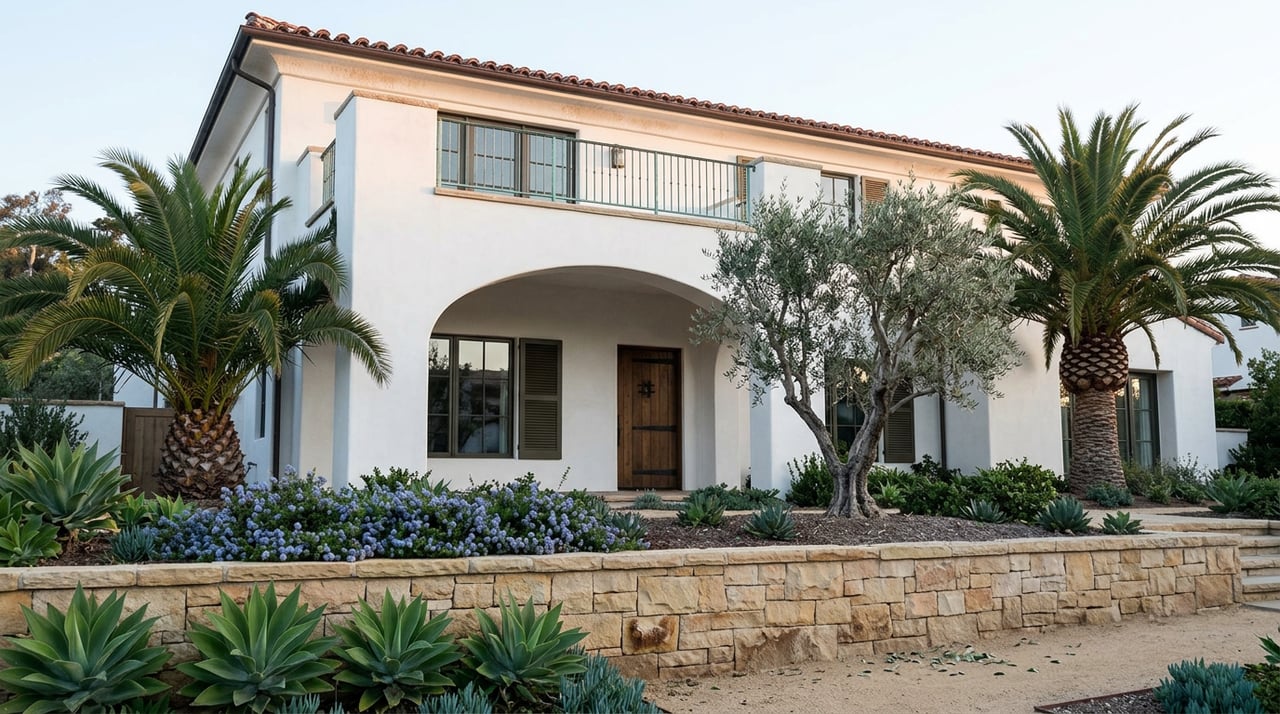
Stand at the corner of Girard Avenue and Prospect Street on the first Saturday of October and you'll see a handful of drivers with QR codes on their phones, hunting for parking near six specific homes. Stand on that same corner nine days later and you'll see a wine glass in almost every hand and a crowd thick enough that crossing the street takes patience. Same corner. Same month. Two entirely different versions of the Village, and residents who know the difference get a much better read on their own October than the ones who show up expecting one long, undifferentiated street fair.
The two calendars in question are Modernism and Architecture Week, which runs October 2 through 11, and the La Jolla Art & Wine Festival, which takes over Girard Avenue on October 10 and 11. They're organized by entirely different groups, aimed at entirely different audiences, and for most of the week they don't touch at all. Then, for one Sunday afternoon, they do.
The Architecture Crowd Goes First, and Quietly
Modernism and Architecture Week opens with a sold-out cocktail party on Friday, October 2, at the Museum of History and Culture La Jolla's campus on Prospect Street. That name is itself new. The organization ran for decades as the La Jolla Historical Society before rebranding this year, a shift its leadership has tied directly to how much the modernism programming has grown.
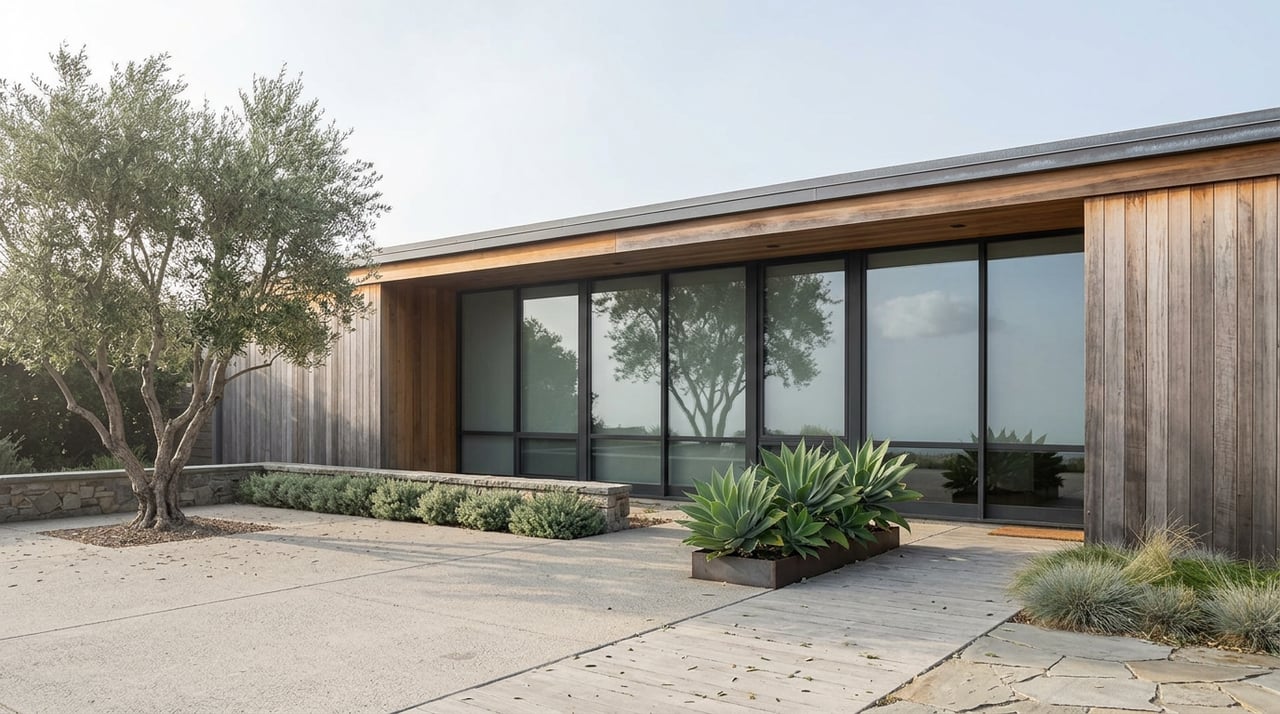
The centerpiece is the La Jolla Modernism Tour on Saturday, October 3, from 10 a.m. to 4 p.m. Ticket holders drive themselves between six privately owned homes at their own pace, tour book in hand, with a Platinum option that swaps the self-drive for a guided bus and lunch. It's the kind of event that draws people who already know the difference between an Irving Gill facade and a Richard Neutra one, and the roster of architects behind the featured houses reads like a syllabus: Gill, Neutra, Rudolph Schindler, and Louis Kahn established the early vocabulary, while a second generation working in La Jolla through the 1950s and 60s, including Homer Delawie, Lloyd Ruocco, Kendrick Bangs Kellogg, Henry Hester, William Kesling, Sim Bruce Richards, Russell Forester, and Frederick Liebhardt, built the specific, sun-bleached version of midcentury the neighborhood is now known for.
The week's programming pushes past residential architecture into UC San Diego's campus, with a guided walk through William Pereira's Geisel Library and a rare tour of Lloyd Ruocco's 1963 Walter Munk Laboratory at Scripps Institution of Oceanography. It's a deliberate choice this year, tying the tour's usual focus on private homes to the public buildings that put La Jolla on the architectural map in the first place.
Joan Gand, who chairs the Modernism Tour committee, put the growth plainly:
"We're excited this year to have more people coming."
MHC La Jolla's executive director, Lauren Lockhart, described the broader ambition behind the expansion:
"There's so much excitement and enthusiasm for modernism in the region, and we love to be able to uncover new stories that haven't been told through these programs."
None of this touches Girard Avenue's retail corridor in any meaningful way. The audience is dispersed across residential streets and a university campus, and the crowd size, while growing, is capped by ticket availability rather than open admission. It's a quiet week, by Village standards.
Then Girard Avenue Changes Hands
On Saturday, October 10, that quiet ends. The La Jolla Art & Wine Festival returns for its 18th year, running both Saturday and Sunday from 10 a.m. to 6 p.m. along Girard Avenue between Prospect Street and Torrey Pines Road, which is the same stretch the Modernism Tour crowd was navigating by car a week earlier, now filled with roughly 170 juried artists from across the U.S. and Mexico showing painting, sculpture, jewelry, glasswork, and ceramics.
The festival draws a reported 40,000-plus attendees over the two days, and general admission is free, which is a meaningful difference from the ticketed, capacity-limited architecture events that preceded it. The Wine & Beer Garden, a 21-and-over add-on at the corner of Girard and Silverado, pours from a rotating lineup of regional and international wineries alongside San Diego craft breweries, and this year adds a new VIP tasting area, according to KPBS, for guests who want a more elevated version of the same experience.
What separates this from a typical arts festival is where the money goes. The festival is run by a nonprofit foundation whose entire purpose is funding underfunded programs at local public schools, and the organization has now raised more than $1.7 million for La Jolla, Torrey Pines, and Bird Rock Elementary Schools, along with Muirlands Middle School and La Jolla High School. That's not incidental sponsorship money. It's the reason the event exists, and it's part of why so many Village families treat the weekend as a fixture rather than an option.
The One Afternoon Where the Two Calendars Meet
Architecture Week doesn't quite end before the festival starts. It ends after it, on the festival's own closing day. The La Jolla Jewel Awards, MHC La Jolla's capstone event honoring restoration and preservation work across the Village, is scheduled for Sunday, October 11, from 4 to 5:30 p.m. at a historic private residence still being finalized. That's the same afternoon the Art & Wine Festival is running its final two hours on Girard Avenue.
For a few hours on that Sunday, both audiences are technically in the neighborhood at once. In practice, they're rarely in the same place. The Jewel Awards is small, ticketed, and held at a private address away from the festival footprint, while the festival itself is sprawled across an open commercial corridor. A resident who wants to catch the tail end of the wine garden and still make a 4 p.m. preservation ceremony has a workable but tight window, and it's the only day all month where that kind of choice comes up at all.
Here's how the two calendars actually lay out:
| Date | Event | Location | Typical Crowd |
|---|---|---|---|
| Fri, Oct 2 | Modernism Cocktail Party | MHC La Jolla, Prospect St | Preservation patrons, MCM collectors |
| Sat, Oct 3 | La Jolla Modernism Tour, 10am-4pm | Six private homes, self-driven | Architecture fans, design tourists |
| Oct 6-9 | Architecture Week lectures and campus tours | UC San Diego, Scripps | History buffs, alumni |
| Sat-Sun, Oct 10-11 | La Jolla Art & Wine Festival, 10am-6pm | Girard Ave, Prospect St to Torrey Pines Rd | Families, art buyers, wine drinkers |
| Sun, Oct 11, 4-5:30pm | La Jolla Jewel Awards | Historic private residence | Preservationists, MHC donors |
Reading the Split as Someone Who Already Lives Here
The practical takeaway isn't which event is better. It's that they're built for different registers, and the Village's October calendar works best when you treat it that way rather than as one long civic season.
If you want the quiet version, the first Saturday belongs to you. Parking around the featured homes will be manageable, the tour moves at your own pace, and you're sharing the street with people who came specifically for architecture, not foot traffic. If you want the loud version, the second weekend is where Girard Avenue becomes a pedestrian-heavy art market, and going in with that expectation, rather than hoping for a leisurely stroll past the boutiques, saves some frustration.
The overlap on October 11 is really a scheduling curiosity more than a genuine conflict. Nobody planning a quiet architecture afternoon is likely to also want a wine garden crowd that same day, and vice versa. But it's worth knowing the overlap exists, because it explains something about how this neighborhood organizes itself: two of the Village's oldest civic threads, preservation and public art, keep landing on the same real estate at the same time of year without any coordination between them. That's not a scheduling accident so much as a sign of how much cultural programming this six-block stretch is now asked to carry.
If you're weighing what that kind of calendar density says about the neighborhood's long-term character, or you're simply trying to figure out where in the Village to plant yourself for easy access to both, Cohen Albrecht Real Estate Group knows these blocks well enough to walk you through it. Schedule a Private Consultation when you're ready to talk specifics.